How to Make Basketball Shoes More Grippy: The Complete Traction Guide
Slippery basketball shoes don’t just hurt your game — they end seasons.
To make basketball shoes more grippy, you need to remove dust buildup from the rubber outsoles and restore traction through deep cleaning or grip enhancers. The fastest fixes: wipe the outsoles with a damp microfiber cloth, apply a traction spray like Edge-Up, or press the soles into a sticky mat to pull debris out of the tread. Thirty seconds between quarters. No excuses.
But here’s what most players miss that basketball shoe traction isn’t just a maintenance task, it’s the foundation of every move you make on the hardwood. I’ve coached long enough to know that the difference between a confident crossover and a season-ending slip comes down to your outsole’s bite. Dusty rec center floor or polished arena hardwood, it doesn’t matter. If your shoe isn’t gripping, you’re playing scared.
Quick Answer: How to Make Basketball Shoes More Grippy
- Wipe outsoles with damp cloth before play
- Step on sticky traction mat courtside
- Deep clean weekly with toothbrush and mild soap
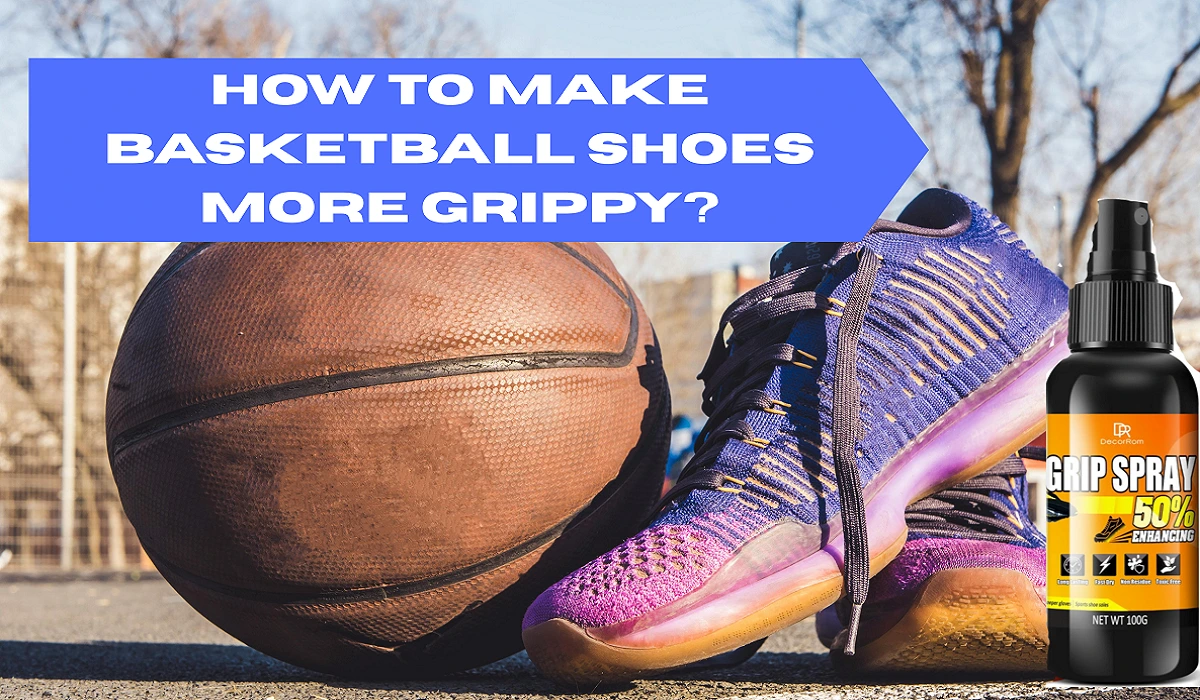
- Apply traction spray for worn rubber
- Rotate two pairs to extend grip life
- Replace when tread pattern flattens
This guide covers everything: quick fixes, deep cleaning routines, the science of rubber rehydration, gear choices built for real traction, and the court habits that protect your grip all season long.
1- Why Your Basketball Shoes Are Losing Grip?
Basketball shoes lose grip for four reasons: dust and debris on the outsoles, worn-down tread patterns, playing on the wrong surfaces, and a loose fit that creates internal foot movement. Fix the right cause and your traction comes back immediately.
Before you fix slippery basketball shoes, you need to understand what’s actually causing it. Slippery shoes aren’t random, there’s always a reason behind. Once you identify it, the solution becomes obvious.
Dust and Debris on the Outsoles
This is the most common culprit and the most overlooked. Every basketball court, even a freshly mopped NBA floor sheds microscopic particles during play. Rubber, dust, skin cells, sneaker residue. It all settles on the hardwood, and your outsoles pick it up with every step.
Once that layer of debris builds between your sole and the floor, you’ve lost contact. Your shoe is no longer gripping wood — it’s riding a thin film of dust. That’s why shoes that gripped perfectly in week one start sliding by week four without any visible wear. The tread is fine. The rubber is fine. The outsole is just dirty.
A quick wipe before tip-off changes everything.
Worn-Down Tread Patterns
Look at the bottom of an older pair. If the herringbone channels or hex pattern has flattened and the sole looks shiny in places, that rubber has been compressed past the point of recovery. Those patterns exist for a reason — they create edges that bite into the floor surface. Once they’re gone, you’re skating.
Hard cuts, lateral slides, and explosive first steps all accelerate tread wear. It’s not a design flaw — it’s physics. High-output players will wear through outsoles faster than casual weekend players. If you’re training five days a week, your shoes have a shorter grip lifespan than the box suggests.
No cleaning routine fixes a worn-out tread. At that point, you’re shopping for replacements.
Playing on the Wrong Surfaces
This one costs players their grip before the season even starts. Indoor basketball shoes are engineered specifically for hardwood — the rubber compound, tread depth, and sole flexibility are all calibrated for that surface. Take them outside on concrete or asphalt even a handful of times and the outsole degrades fast. The abrasion from rough outdoor surfaces tears through tread patterns in a fraction of the time hardwood would.
The floor condition matters just as much. A dusty gym, a wet court near an entrance, or a surface that hasn’t been mopped in weeks will defeat even the best outsole. I’ve seen players in premium shoes slip on a neglected rec center floor while someone in budget kicks stayed planted, simply because they wiped their soles and the other player didn’t.
Your shoes can only work with what the floor gives them.
Loose Fit and Sloppy Lacing
This one is underrated and rarely talked about in grip guides. Traction isn’t just about what happens between your outsole and the floor — it’s about what happens between your foot and the shoe. If your heel is lifting, if your midfoot is shifting inside the upper, if your laces are loose enough to allow any internal movement, you’ve introduced a lag between your intent and your foot’s actual response.
Your brain sends the signal to cut. Your foot moves. But the shoe reacts a half-beat late because it’s not locked to your foot. That delay feels like slipping even when the outsole itself has perfect grip.
Lace up snug every single time. Heel locked down, midfoot secure, no dead space in the upper. It takes twenty extra seconds and it genuinely changes how the shoe responds on the court.
2- Clean Your Basketball Shoe Outsoles Regularly
The single most effective way to restore grip on basketball shoes is cleaning the outsoles. Dust, court debris, and compacted grit sitting in your tread grooves are the difference between a shoe that bites and one that slides. Clean soles grip. Dirty soles don’t. It’s that simple.
Most players buy better shoes when they should just clean the ones they have. I’ve seen this a hundred times on the sideline — a player complaining about traction while their outsoles are grey with three weeks of gym dust. Five minutes of cleaning would solve ninety percent of their problem.
Coach’s Non-Negotiable: A damp microfiber cloth and a sticky mat in your bag. That’s it. Players who carry both never complain about slippery shoes mid-game because they never let the problem develop in the first place.
Quick Wipe Before and During Games
Make this a reflex. Before tip-off, during timeouts, at every free throw — run the bottom of your shoes across a damp towel, a bench mat, or even a moist microfiber cloth. It takes three seconds and it physically lifts the dust layer that’s killing your contact with the floor.
Serious players keep a damp rag courtside. Some teams have sticky traction mats at the scorer’s table. There’s a reason for that. One swipe before a possession can be the difference between a clean defensive slide and an embarrassing stumble in front of a full gym.
Don’t wait until you feel yourself slipping. By then you’ve already lost the rep.
Deep Clean After Every Few Sessions
Once a week, or after any particularly dusty session, give your outsoles a proper clean. Warm water, a few drops of mild soap, and an old toothbrush. Scrub the tread grooves in short strokes . In this way, you’re not just cleaning the flat surface, you’re pulling debris out of the channels where your grip actually lives.
Rinse thoroughly and air-dry completely before your next session. No shortcuts here. A damp outsole on hardwood is almost as bad as a dusty one. Water reduces friction just as effectively as dirt.
And never use a hairdryer or any direct heat source to speed up drying. The adhesive bonding your outsole to the midsole is heat-sensitive. One impatient drying session can start delaminating the sole, and once that bond weakens, no amount of cleaning brings the shoe back.
Dig Out Hidden Grit from the Grooves
This is the step most people skip, and it matters more than they realize. Small stones, hardened dust plugs, and compacted debris work themselves deep into herringbone channels and hex patterns during play. A surface wipe won’t touch them.
Take a toothpick or a stiff-bristled brush and work through the grooves methodically. It’s tedious for about four minutes. But those packed grooves are exactly where your tread pattern generates bite. If they’re filled with grit, the pattern is functionally useless regardless of how much rubber is left.
Clean grooves grip like new. Clogged grooves grip like worn-out flats. The rubber hasn’t changed. The contact has.
Once your outsoles are clean and every groove is clear, you’ve restored the baseline. But what do you do when you’re mid-game, dust is settling back faster than you can wipe, and you need grip restored in the next thirty seconds? That’s where quick-fix solutions during live play come in , and some of them work faster than anything in your gear bag.
| Method | Best For | Time Required | Lasts |
|---|---|---|---|
| Damp towel wipe | In-game dust removal | 30 seconds | 1 quarter |
| Sticky mat | Pre-game grip reset | 10 seconds | 1 session |
| Deep clean | Weekly maintenance | 10 minutes | Several sessions |
| Traction spray | Worn rubber restoration | 2 minutes | Full game |
| Traction pads | Flattened tread zones | 5 minutes | Several sessions |
| New shoes | Dead outsole replacement | — | Full shoe lifespan |
3- Quick Fixes to Restore Grip During Live Play
When your shoes start slipping mid-game, you have three reliable options: step on a sticky traction mat, wipe your outsoles with a damp towel, or scrape visible debris off the sole with your hand. Everything else is a gimmick. These three methods work because they physically remove the dust layer — they don’t mask the problem, they eliminate it.
Grip doesn’t always fail before tip-off. Sometimes it goes on you in the third quarter when the floor gets dusty and the game is on the line. You need solutions that work in thirty seconds or less, without leaving the court or breaking your focus.
Traction Mats and Sticky Pads
This is the most effective in-game fix available. A portable sticky mat — the same kind you see courtside at professional games — grabs dust, rubber particles, and fine debris off your outsoles in two or three deliberate steps. The adhesive surface pulls what a towel wipe leaves behind.
Serious players keep one in their gear bag. Some gyms have them mounted near the bench. If yours doesn’t, bring your own. A sticky mat costs less than a single performance insole and it will do more for your in-game traction than almost any product you can buy.
Step on it during timeouts, free throws, or any dead ball situation. Make it automatic.
Damp Towel Wipe
No mat available? A slightly damp towel works. Lay it flat, press each sole down firmly, and give it a short drag. The moisture lifts the surface dust layer that’s breaking your contact with the floor.
Your jersey works in a pinch. Your palm in a pinch. But the damp towel is meaningfully better than a dry wipe — moisture creates a mild adhesive effect that pulls particles off rubber more effectively than friction alone.
Keep one folded on the bench. It weighs nothing and takes up no space.
What Not to Do
Hairspray, hand sanitizer, lotion, saliva — players have tried all of it. Some of these create a brief tacky sensation that feels like restored grip. It isn’t. What they actually do is leave a residue on the rubber that attracts more dust, breaks down the outsole compound over time, and in some cases makes the slipping worse within minutes.
Saliva dries. Hairspray gums up the tread grooves you just cleaned. Hand sanitizer strips the natural tackiness from rubber rather than restoring it. These are solutions born from desperation, not results. Skip them entirely.
If a damp towel and a sticky mat are your only real in-game options, use them confidently — they’re what the professionals use too.
Wiping and stepping on mats handles the immediate problem. But if you’re dealing with outsoles that have lost their natural tackiness beyond what cleaning can restore — or if you’re playing in a dusty gym every single day — you need something that works proactively and lasts longer than a timeout. That’s exactly where traction-enhancing products come in, and a few of them have genuinely changed how players manage grip at every level of the game.
Never Put These on Your Outsoles Hairspray, hand sanitizer, lotion, and saliva all feel tacky for about sixty seconds — then they clog your tread grooves, attract more dust, and leave your rubber worse than before. If it wasn’t made for basketball shoe rubber, keep it off your sole.
4- Use Traction-Enhancing Products to Restore and Maintain Grip
Traction-enhancing products like grip sprays, tacky gels, and adhesive traction pads, restore outsole friction when cleaning alone isn’t enough. They work by coating or supplementing the rubber contact surface with a stickier layer, giving your shoe more bite on dusty or polished courts. Used correctly, they’re legitimate performance tools. Used wrong, they create buildup that makes traction worse.
Cleaning handles dirt. Product handles the rubber itself. Once you understand that distinction, you stop reaching for a spray when you need a towel wipe — and you stop scrubbing when the rubber compound has simply lost its tackiness and needs chemical restoration.
Grip Sprays and Tacky Gels
Court sprays and traction gels work by depositing a thin adhesive layer across the outsole surface just before game time. A light application — usually a short mist or a small amount worked across the sole — is enough to meaningfully increase the friction coefficient between your rubber and the hardwood.
Less is more here. Over-applying builds residue in the tread grooves faster than normal wear does, which defeats the purpose entirely. Apply sparingly, wipe evenly, and treat these as a pre-game boost or a mid-game rescue in genuinely dusty conditions — not a substitute for regular cleaning.
Products like Grip Boost, SlipNot, and Edge-Up are built specifically for court surfaces. They won’t degrade indoor basketball rubber the way outdoor or multi-purpose products can. Always read the application instructions. What works for one formula doesn’t necessarily work for another.
Traction Pads and Adhesive Grip Strips
Peel-and-stick traction pads attach directly to your outsole and create additional micro-grip points across the contact surface. Think of them as tread boosters — they don’t replace worn patterns, but they add friction texture to areas where the original herringbone or hex design has compressed.
These are a semi-permanent solution. A good set lasts several sessions before the adhesive degrades and they need replacing. They’re particularly useful for players whose outsoles still have rubber depth but have lost the sharp tread edges that generate bite.
One important check before you use them: some recreational leagues and most organized competitive leagues prohibit aftermarket sole modifications. Verify your league rules before applying anything to your outsole in a game setting. For training and pickup, they’re fair game.
Pick the Right Product for Your Shoe and Surface
Not every traction product is built for every surface. Indoor-specific sprays are formulated for hardwood and synthetic court surfaces — they restore grip without breaking down the rubber compound or leaving residue that damages the floor. Multi-surface or outdoor products are often too aggressive for indoor rubber and can accelerate outsole degradation.
Before committing a new product to your game shoes, test it on a small section of the outsole first. Check the grip, check the feel, and inspect the rubber after it dries. If there’s any staining, stiffness, or unusual texture, that product isn’t compatible with your shoe’s rubber blend.
The right product on the right shoe on the right surface is genuinely effective. The wrong combination costs you grip and shortens your shoe’s lifespan simultaneously.
Products extend the life of your outsole’s performance , but they can only do so much. When the rubber itself is gone, when the tread pattern is flat, when the midsole has compressed past the point of return, no spray or pad brings that shoe back. That’s when the conversation shifts from maintenance to replacement. It’s the time to know when to rotate your shoes and when to retire them entirely is just as important as any cleaning routine you’ll build.
5- Choose the Right Basketball Shoes, Rotate Your Pairs, and Know When to Replace
The right basketball shoe for grip has three non-negotiables: an aggressive multidirectional tread pattern, a soft rubber outsole compound built for indoor hardwood, and a fit that locks your foot in place. Beyond choosing correctly, rotating between two pairs and recognizing when tread is genuinely dead will do more for your long-term traction than any spray or cleaning routine.
Most players treat shoe selection as a style decision and maintenance as an afterthought. Flip that priority and your grip problems largely solve themselves before they start.
Tread Pattern Is Your First Filter
When you’re evaluating basketball shoes for traction, turn them over before you try them on. The outsole pattern tells you everything. Herringbone grids, multidirectional hex patterns, and radial tread designs all serve the same purpose — they create edges that bite into the floor surface from multiple angles regardless of which direction you’re moving.
A shoe that grips your forward drive but slides on a lateral cut is a poorly designed outsole. Look for patterns that run in multiple directions across the full contact surface. Those channels also actively redirect dust away from the grip zones during play, which means they stay cleaner longer between wipes.
Rubber Compound Determines How Hard the Shoe Grips
Tread pattern creates the structure. Rubber compound determines the actual friction. Softer rubber compounds grip indoor hardwood more aggressively because they deform slightly on contact, increasing the surface area touching the floor at any given moment.
The tradeoff is durability — softer rubber wears faster under high-output play. Most premium basketball shoes balance this by using a moderately soft compound with reinforced high-wear zones under the heel and forefoot. When you’re comparing shoes, look for outsoles described as non-marking indoor rubber. That designation tells you the compound is engineered specifically for hardwood friction rather than adapted from a running or cross-training formula.
Keep Indoor Shoes Indoors
This is non-negotiable. Indoor basketball shoes are precision tools built for one surface. The moment you wear them on concrete, asphalt, or even rough outdoor court surfaces, the abrasion begins stripping the rubber compound and flattening the tread edges that generate grip. A few outdoor sessions can do weeks’ worth of wear damage to an indoor outsole.
If you need shoes for outdoor runs, buy a separate pair built for it. The cost of a dedicated outdoor shoe is significantly less than replacing premium indoor shoes ahead of schedule — and your indoor grip stays intact for when it actually matters.
One Rule That Saves Your Outsoles Indoor shoes stay indoors. The moment your court shoes touch concrete or asphalt, the abrasion begins stripping the rubber compound that generates your grip. A separate outdoor pair costs less than replacing premium indoor shoes two months early.
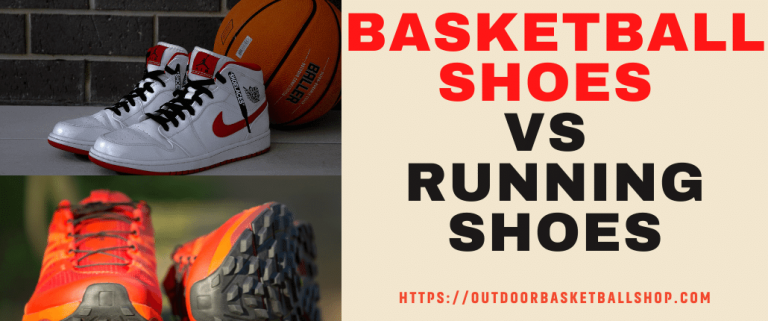
Not sure if your current shoes are even built for basketball in the first place? If you’ve been playing in running shoes, grip isn’t your only problem — check out our breakdown of Basketball Shoes vs Running Shoes to see exactly what you’re sacrificing on the court.
Rotate Between Two Pairs
Rubber has memory. After an intense session, the outsole compound has been compressed, stressed, and heated through friction. Wearing the same shoes every day without recovery time accelerates that compression and reduces the rubber’s natural ability to grip.
Rotating between two pairs gives each outsole time to decompress and return closer to its resting state between sessions. Players who rotate pairs consistently report noticeably longer grip life from both shoes. It also gives you time to clean one pair properly while the other is in use — which means you’re never stepping onto the court with a dirty outsole because you ran out of drying time.
Two pairs rotated well will outlast three pairs worn carelessly.
Recognize When a Shoe Is Done
No cleaning routine, no spray, no traction pad saves a dead outsole. When the herringbone channels have compressed flat, when the rubber looks shiny and hard across the contact zones, when the sole is separating from the midsole at the edges — that shoe is finished. Playing on it isn’t just a traction problem, it’s a joint problem. A collapsed outsole changes how impact force travels through your ankle and knee on every landing.
Don’t rationalize keeping shoes past their grip life because they still look clean from the top. The performance is in the sole. When the sole is gone, the shoe is gone. A fresh pair is an investment in your knees as much as your crossover.
Clean shoes and the right pair take you a long way. But the condition of the floor itself determines how much grip even a perfect outsole can generate. Few simple habits around court maintenance can make every shoe perform better from the first possession to the last.
If you do play outdoors regularly, the right shoe makes all the difference — not just for grip but for durability on rough surfaces. Our guide to the Best Outdoor Basketball Shoes breaks down the top picks built specifically to handle asphalt and concrete without destroying your outsole in a month.
6- How to Maintain Basketball Shoe Grip Long-Term?
Long-term basketball shoe grip comes down to three habits: keeping the court surface clean, moving on it with technical precision, and following a consistent post-game maintenance routine. Players who do all three don’t lose traction mid-season because they never let the conditions for grip failure develop in the first place.
Equipment gets you started. Habit keeps you there.
Every section in this guide up to this point has dealt with fixing a problem. That arises with dust on the outsole, worn tread, slippery conditions, the wrong shoe choice. This section is different. This is about building the kind of discipline around your footwear and your movement that makes those problems rare instead of routine. The players I’ve coached who never complained about slipping weren’t wearing better shoes than everyone else. They were just more deliberate — about the floor they played on, the way their feet moved across it, and the three minutes they spent on their shoes after every session.
Start with the environment. Then the body. Then the routine. In that order, because each one builds on the last.
Keep the Court Clean for Maximum Traction
Keep the court clean for maximum traction because your outsole can only grip what the floor gives it. If the surface between your rubber and the hardwood is a layer of settled dust, you’ve lost traction before the opening tip regardless of what’s on your feet.
A dirty court defeats every grip solution available. Dust, rubber residue, and floor debris reduce friction for every player regardless of shoe quality, outsole condition, or traction product used. The best basketball shoe in the world underperforms on a neglected floor. Court cleanliness is a shared performance standard, not a janitorial preference.
Advocate for Proper Court Maintenance
Before practice or a pickup session, Proper court maintenance is essential. Use dry-mop or sweep the playing surface if it hasn’t been done. Most recreational gyms don’t mop between every session — dust, shoe rubber particles, and tracked-in debris accumulate across the hardwood and create a low-friction film that affects everyone on the court.
If you’re running your own sessions, make floor prep non-negotiable. If you’re a guest in someone else’s gym, ask. Most facilities appreciate the request. A two-minute sweep before play improves traction for every player from the first possession — it’s the highest return-on-effort maintenance move available and almost nobody does it.
Watch Where You Step
The moment you walk off the court surface — into the bleachers, down a hallway, across a rubber mat near the entrance — your outsoles pick up whatever is on that surface. Concrete dust, hallway grit, rubber particles from flooring transitions. When you return to the hardwood, you bring all of it with you.
Make it a habit: any time your feet leave the court surface, wipe your outsoles before stepping back on. During timeouts when players drift toward the bench area, during warmups when you walk through a side door, between games when you sit in the stands. It takes three seconds and it protects the grip you just spent a session maintaining.
Bring Your Own Wipes When the Gym Doesn’t Have Mats
Not every facility has a sticky mat courtside. So, bring your own wipes when the gym doesn’t have mats. Most don’t. A small towel in your bag, whether dry or barely damp, solves this entirely. Fold it flat, press each sole down, give it a short drag. Done.
Some players use an old sock. Some keep a dedicated microfiber cloth clipped to their bag. The specific tool matters less than the habit of having something available so you’re never standing on a dusty floor waiting for a solution that isn’t coming.
Clean shoes on a clean floor is the complete equation. But equipment and environment only take you so far — at some point, the way your body moves on the court either protects your traction or destroys it. Players who understand how foot placement, body control, and movement quality interact with grip don’t just maintain their traction longer — they generate more of it with every step.
Improve Your Footwork and Body Control to Maximize Grip
Traction isn’t only generated by your outsole — it’s generated by how your foot contacts the floor. Proper foot placement, a strong core, and controlled movement patterns increase the effective grip of any shoe. Players with poor body mechanics slip in shoes that would hold perfectly under a technically sound player.
Most grip guides stop at the equipment. This is where the real separation happens.
Train Deliberate Foot Placement
Grip is maximized when the full contact surface of your outsole meets the floor with consistent, even pressure. Sloppy footwork — lazy plant steps, off-balance landings, cutting on the outer edge of the sole — reduces that contact area and creates the conditions for slipping even on a clean floor with fresh rubber.
Incorporate drills that emphasize deliberate foot placement into every practice session. Defensive slide drills, controlled change-of-direction work, and focused landing mechanics all train your feet to find the floor properly under game-speed conditions. Players who have done this work don’t think about footing mid-play — their feet find the right position automatically.
Build Core Strength and Balance
A low center of gravity and a strong, stable core mean your body weight stays centered over your base of support during cuts, drives, and defensive rotations. When your center of mass drifts outside your base — which happens when your core is weak or your balance is underdeveloped — your outsole has to compensate for that imbalance, and grip breaks down under the lateral force.
Single-leg balance work, plyometric landing drills, and rotational core exercises all directly improve your ability to stay planted under game conditions. A player with average shoes and excellent balance will often out-grip a player with premium footwear and poor body control. The shoe provides the tool. Your body determines how effectively it’s used.
Move with Control, Not Just Speed
Jerky, uncontrolled direction changes are where most in-game slips actually happen. The outsole loses contact not because the rubber is bad but because the force applied was lateral and sudden — more than the available friction could absorb in that moment.
Controlled cuts generate more usable traction than explosive uncontrolled ones. Think of it as working with the floor rather than against it — smooth weight transfer into your plant foot, deliberate push-off angle, deceleration before acceleration. These aren’t just technique cues, they’re grip mechanics. The players who rarely slip aren’t always wearing the best shoes. They’re usually moving the smartest.
Equipment, environment, and movement quality all feed into your traction. But none of it holds without consistency. A single good cleaning session or one well-chosen pair of shoes doesn’t protect you through a full season. What does is a repeatable routine — one that becomes automatic enough that your grip never deteriorates because you simply never let it get that far.
Traction and explosiveness work together — a player with a strong base doesn’t just grip better, they jump higher. If you’re working on your vertical alongside your court mechanics, our Dunk Calculator tells you exactly how high you need to get off the floor to throw it down.
Build a Basketball Shoe Maintenance Routine That Protects Grip All Season
A consistent shoe maintenance routine of wiping before play, deep cleaning weekly, rotating pairs, and inspecting tread regularly — is the only reliable way to maintain basketball shoe grip across a full season. Players who build this habit don’t experience sudden mid-game traction failures because they never let their outsoles reach that point.
Grip doesn’t disappear overnight. It erodes gradually through accumulated dust, compressed rubber, and neglected tread — and a routine catches each of these before they become a problem.
Post-Game Care After Every Session
The moment you’re done playing, post-game shoe care starts before the shoes go in the bag. Wipe the outsoles with a damp cloth to remove the dust and debris picked up during play. Remove the insoles and loosen the laces to allow airflow through the upper and midsole foam. Set them in open air — not a closed bag, not a dark locker — until they’re fully dry.
Moisture trapped inside a shoe overnight breaks down the foam, weakens the adhesive holding the outsole, and creates the conditions for rubber degradation. Three minutes of post-game attention adds months to your shoe’s grip life.
Weekly Inspection and Deep Clean
Once a week, do a proper inspection. Turn the shoe over and look at the tread under good light. Are the groove channels still clear? Are any sections of the herringbone pattern starting to flatten? Is the rubber still showing some texture or going smooth and shiny in high-wear zones?
Then clean properly — warm water, mild soap, toothbrush through the grooves, full rinse, complete air dry. If you’re using a protective spray, this is when you reapply. Catching tread wear early means you know when replacement is approaching rather than discovering it mid-game when your first step gives way.
Make the Routine Automatic
The players who never have grip problems aren’t doing anything complicated. They wipe before play, clean after, rotate their pairs, and replace shoes when the tread is gone. That’s the entire system. It takes less total time per week than one quarter of basketball, and it eliminates the category of problem entirely.
Consistency is the only maintenance strategy that works at scale. One cleaning session fixes today. A routine protects the whole season.
Frequently Asked Question
What’s the fastest way to boost grip before a game?
The most effective way to instantly restore grip is by using a sticky traction mat or a damp microfiber towel to remove microscopic dust. This process cleans the “pores” of the rubber outsole, allowing the tread to make direct contact with the hardwood. For lasting traction, ensure you wipe the soles every few minutes during gameplay to prevent dust buildup.
Can I use hairspray, WD-40, or hand sanitizer on my shoes?
No—using household chemicals like hairspray or sanitizer will permanently degrade your shoe’s rubber compound. While these may feel “tacky” for a few minutes, the alcohols and salts in these products cause the rubber to oxidize and harden. This ultimately results, reducing the coefficient of friction. Stick to specialized, pH-balanced shoe grip sprays designed specifically for athletic outsoles.
How do I know when to replace my shoes?
You should replace your shoes when the outsole tread grooves are worn flush with the base or if the rubber has become “glassy” and hard. Physical wear is a clear indicator, but “chemical death”—where the rubber loses its elasticity due to age—is equally important. If you find yourself slipping on clean courts even after a wipe, the rubber’s grip properties have reached their end of life.
Will adding grip tape or grip pads ruin my shoes?
Properly applied traction pads or grip tape will not ruin your shoes and can actually extend their functional lifespan. These products act as a sacrificial layer between the floor and your outsole. To avoid damage, ensure the adhesive is “residue-free” and follow league-specific regulations regarding equipment modifications.
Does the color of the sole matter?
The color itself does not dictate grip, but the chemical composition—such as solid vs. translucent rubber—often does. While solid rubber is generally more consistent, translucent soles can sometimes be “stickier” but more prone to picking up dust. If your soles are yellowing, it is a sign of oxidation, which suggests the rubber is hardening and losing its natural tackiness.
Can thicker socks improve grip?
Thicker socks do not improve court-to-shoe traction; they only improve “internal lockdown” and fit. To stop your foot from sliding inside the shoe, thicker socks or “grip socks” with silicone pads are effective. However, to improve your grip on the floor, you must focus entirely on the maintenance and cleanliness of the shoe’s outsole.

Hello!
I’ve been playing and coaching basketball for over 15 years, and testing gear has always been part of my passion for the game. Over the years I’ve personally assembled and used more than 50 different basketball hoops — from budget portables you can roll onto a driveway to heavy in-ground systems that feel like what you see in gyms.
When I review a hoop, I don’t just copy specs from the box. I set it up, play on it in different conditions, and pay attention to how it holds up — whether it’s rim stability, rebound quality, or how the base handles wind and weather. I also keep up with the latest product releases and feedback from other players so my guides reflect what actually works, not just marketing claims.
My goal here at Outdoor Basketball Shop is simple: to share hands-on, unbiased insights so you can choose the right hoop for your space, your budget, and your style of play. Every recommendation is based on real testing and experience, and I always disclose when links may earn a commission, at no extra cost to you.
. Learn more about me on my about page.