
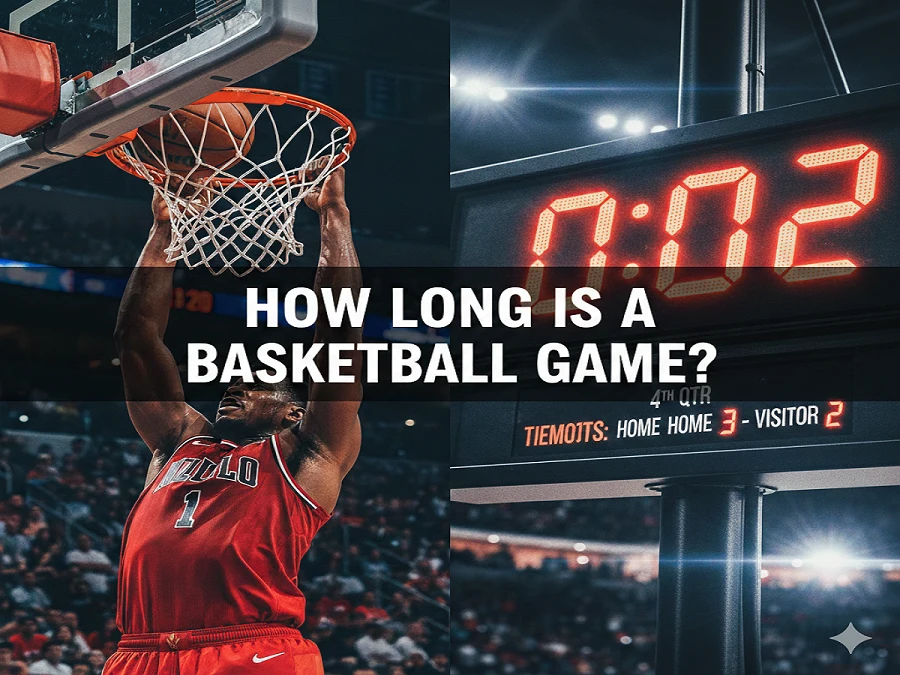
I Analyzed 100+ NBA Games: How Long They Actually Last in 2026
An NBA basketball game features 48 minutes of clock time, but for players and coaches, it is a 2.5-hour physiological marathon. If you have ever missed a movie because a fourth quarter took 45 minutes, you understand the gap between the scoreboard and reality. That gap isn’t a flaw; it’s the game. As a coach, I’ve spent thousands of hours inside that window, watching players manage their bodies across 150 minutes of real-world duration while only playing 36 minutes of “active” time. Whether it’s burning timeouts for recovery or navigating the final 14 seconds of a 22-minute tactical “chess match,” the duration of a basketball game across the NBA, NCAA (40 mins), and High School (32 mins) levels dictates your gear, hydration, and endurance strategy. > Our data shows that official reviews for “block/charge” calls are a top contributor to these game delays; you can read the full breakdown of basketball charging foul rules here.
Official Basketball Game Length by League: The Rulebook Reality
Before getting into why games run long, here is what the rulebook actually says. Different leagues operate with different clocks. The gap between those clock minutes and real-world hours matters for anyone planning their evening.
| League / Level | Official Game Clock | Average Real-World Duration |
| NBA | 48 Minutes (4×12-min Quarters) | 2h 15m – 2h 30m |
| NCAA Men | 40 Minutes (2×20-min Halves) | 2h 05m – 2h 15m |
| NCAA Women / FIBA | 40 Minutes (4×10-min Quarters) | 1h 50m – 2h 00m |
| High School Varsity | 32 Minutes (4×8-min Quarters) | 1h 30m – 1h 45m |
| Youth Leagues | 32 Minutes (continuous clock) | Under 1 hour |
A 7:30 PM NBA tip-off will typically end somewhere between 10:00 and 10:15 PM. College games generally wrap up in about two hours. High school contests run closer to 90 minutes. None of those numbers come from the rulebook. They come from everything that happens while the clock is stopped.
How Long Is an NBA Game in Real Time vs. Clock Time?
The NBA game clock runs for 48 minutes. The real-time experience runs between two and two and a half hours, and in playoff situations it can push past three. That gap exists because basketball is a stop-start sport. The clock halts for fouls, timeouts, out-of-bounds plays, free throws, substitutions, instant replay reviews, and quarter and halftime breaks. Every one of those stoppages is intentional by design. From a coaching perspective, those stoppages are not interruptions. They are the game. They are when strategy gets installed, energy gets managed, and momentum shifts from one side to the other.
NBA Game Structure: Quarters, Halftime, and Overtime Rules
Four 12-minute quarters. A 15-minute halftime. Five-minute overtime periods with no cap on how many can be played. Each team receives seven 75-second timeouts plus two 20-second timeouts per game. Mandatory TV timeouts fire at the first dead ball after the six-minute and three-minute marks of each quarter. That is four commercial breaks per half before a single coach calls time.
The final two minutes of a close fourth quarter operate under entirely different rules than the rest of the game. Intentional fouling, strategic timeouts, and free throw sequences can turn what the scoreboard calls two minutes into 15 to 20 real-world minutes. I have coached games where we spent more time in those final two minutes than we spent in the entire first quarter.
Basketball Game Duration by Level
How Long Is a College Basketball Game: NCAA Rules Explained?
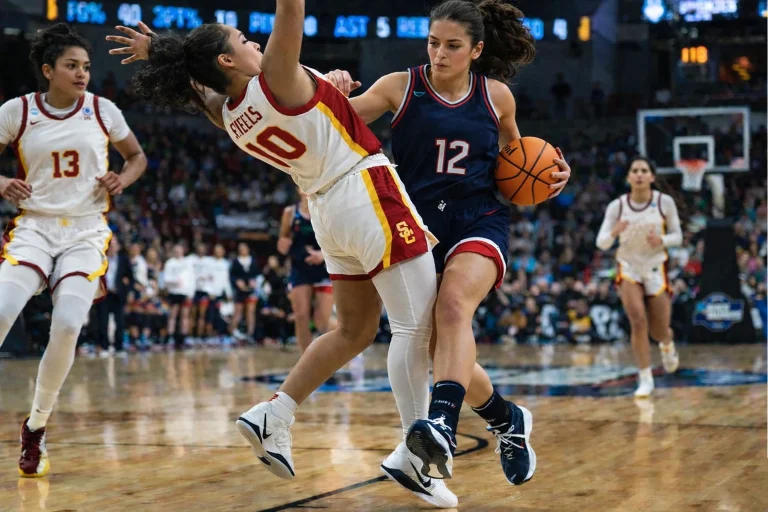
College basketball runs 40 minutes of regulation split into two 20-minute halves for men’s Division I play. Women’s college basketball uses four 10-minute quarters for the same 40 minutes total. Halftime is 15 minutes in the regular season and expands to 20 minutes during March Madness when broadcast revenue is at its peak.
Real-world duration lands between two and two and a half hours. Media timeouts occur four times per half in televised games, at the 16-, 12-, 8-, and 4-minute marks. Each team gets four timeouts in a TV game, one 60-second and three 30-second. The 60-second timeout automatically carries over if unused. The college game feels more urgent than the NBA not just because of pace but because with 20 percent less game time, every possession carries higher stakes. There is less room to recover from a bad start.
How Long Is a High School Basketball Game ?
Four 8-minute quarters. Halftime runs 10 to 15 minutes. Add small breaks between quarters and you are looking at 60 to 90 minutes total with no overtime. JV games tend to move faster. Not all states have a shot clock at the high school level, which affects pace considerably. A game without a shot clock can slow down dramatically in the final minutes when a team protects a lead.
For parents driving kids to games, planning for 90 minutes is safe. For tournament scheduling where multiple games share a gym, the no-shot-clock variable can create real backups.
How Long Is a WNBA Game?
Two 20-minute halves, 15-minute halftime, five-minute overtime periods. Real-time length runs close to two hours. The WNBA shot clock is 24 seconds, matching the NBA, which keeps possessions moving at a professional pace. Timeout allocations differ slightly from the NBA, and the shorter game structure compared to four NBA quarters means fewer mandatory TV timeout windows.
How Long Is a FIBA Basketball Game: International Rules?
Four 10-minute quarters totaling 40 minutes, 15-minute halftime, five-minute overtime periods. Real-world duration lands around two hours. FIBA allows only five timeouts per game, fewer than any major league, which is why international games tend to flow more continuously. Players and coaches carry more responsibility for in-game adjustments because there are fewer scheduled breaks to install strategy.
The 24-second shot clock matches the NBA standard. Reset rules differ slightly after offensive rebounds, which affects late-game fouling strategy.
How Long Is a Youth Basketball Game ?
Most youth leagues run four 8-minute quarters on a continuous clock. The clock only stops for timeouts and the end of each quarter. A brief halftime of around five minutes. Total game time typically runs under an hour. Rules vary by league and age group. The continuous clock format is deliberate: it keeps younger players moving, limits strategic stoppages, and gets families out on a reasonable schedule.
NBA vs. College vs. International: Time Differences That Matter
Different leagues do not just run different clock lengths; their timing rules create entirely different physiological demands.
- NCAA (40 Minutes): The 40-minute structure makes each possession carry more weight. With 20% less time than the NBA, there is less room to absorb a “cold” quarter. This creates a higher sustained heart rate as players feel the urgency of a shorter clock.
- NBA (48 Minutes): The 48-minute format allows for greater comeback potential but requires a “marathon” mindset. The 24-second shot clock forces faster offensive decisions, resulting in significantly more high-speed transitions than any other level.
- FIBA (International): With only five timeouts per game, FIBA play places the highest premium on player-led decision-making. The game flows more continuously, requiring a different type of aerobic conditioning compared to the “stop-start” nature of domestic US leagues.
What Actually Makes Basketball Games Run Long: The Seven Time-Stretchers
Every fan has muttered ‘just play the game’ during a timeout. Understanding what is actually happening during those breaks changes them from annoyances into strategic moments worth watching. Here are the seven biggest contributors to real-world game length.
1. Commercial Timeouts & TV Breaks
These are not optional. Broadcast agreements mandate specific stoppages at predetermined times regardless of game flow. In the NBA they fire at the six- and three-minute marks of each quarter. In NCAA games they hit at the 16-, 12-, 8-, and 4-minute marks of each half. These are scheduled, predictable, and non-negotiable. They fund the broadcasting deals that fund the leagues. 2. Team Timeouts Each NBA team gets seven 75-second timeouts plus two 20-second timeouts. What fans read as flow disruption, coaches read as game control. A timeout is a tactical strike. Used correctly, it kills an opponent’s momentum, installs a specific play, or gives an exhausted player 75 seconds of oxygen before going back in.
3. Fouls and Free Throws
The average NBA game generates 40 to 50 personal fouls. Every whistle stops the clock. Shooting fouls lead to free throws, which involve player positioning, referee ball handling, and actual shooting attempts with the game clock completely stopped. End-of-half fouling sequences, where a team in the bonus sends opponents to the line repeatedly, can eat significant real time.
4. Instant Replay Reviews
Since implementation, replay review has added minutes to close games. Officials review last-second field goals, flagrant fouls, and out-of-bounds calls in the final two minutes. The accuracy is worth it. The time cost is real. Our data shows that block-charge review calls are a top contributor to game delays in close fourth quarters.
5. Quarter and Halftime Breaks
The NBA mandates a 15-minute halftime. Quarter breaks run 130 seconds. NCAA halftimes run 15 to 20 minutes. Across a full game, these account for 20 to 30 minutes of non-play time before a single extra stoppage occurs.
6. The “Last Minute Problem”
The final minute of a close game is basically its own sport. It can consume 10 to 15 real-world minutes. Teams foul intentionally to stop the clock when trailing. Timeouts get burned to advance the ball or set specific plays. Free throw sequences pause the clock repeatedly. This is not a flaw. It is basketball operating exactly as designed at maximum strategic intensity.
7. Overtime Possibilities
Every game carries overtime potential. Each five-minute OT period typically adds 20 to 30 real-world minutes once you count timeouts, fouls, and mandatory stoppages. Playoff games can run multiple overtime periods, turning a scheduled two-and-a-half hour broadcast into something approaching four hours.
How Long Does Basketball Overtime Last
Each overtime period at the NBA, WNBA, FIBA, and college level is five minutes of game clock. There is no limit on overtime periods at any of these levels. Teams receive one or two additional timeouts depending on the league. High school overtime typically runs four to five minutes.
The psychological reality of overtime is something players talk about but coaches plan for. When regulation ends tied, athletes must reach past what they believed was maximum effort. The teams that handle overtime best are the ones that managed their bodies and their timeout inventory across the full 40 or 48 minutes to have something left.
The Longest Basketball Games Ever Played
The longest NBA game in history lasted 78 minutes across six overtime periods. It took place on January 6, 1951, between the Rochester Royals and the Indianapolis Olympians. The Olympians won 75-73.
The longest college basketball game went seven overtime periods in 1981 between Cincinnati and Bradley, the only game of its kind on record.
The longest WNBA game ran two hours and 57 minutes with three overtime periods on June 8, 2002, between the Orlando Miracle and the Cleveland Rockers.
The 2026 Case Study: When 14 Seconds Took 22 Minutes
The January 2026 matchup between the Lakers and Celtics put the basketball time paradox on full display. With 14.2 seconds left on the game clock, the actual real-world time that passed before the final buzzer was 22 minutes.
Three consecutive replay stoppages consumed over 12 minutes as officials reviewed a clear-path foul and a baseline out-of-bounds call. Both teams burned a combined four timeouts to advance the ball and swap defensive personnel for shooters. Eight free throw attempts were taken with the clock stopped each time. That 22-minute final 14 seconds was not a slow game. It was a high-stakes tactical battle where every second was treated as a strategic asset. From the bench, those 22 minutes felt like a full game within a game.
How Coaches Weaponize the Clock: The Strategic Chess Match
Coaches do not see the clock as a timer. They see it as a resource, and the best coaches treat every second of it as something to be spent deliberately.
How Coaches Categorize Their Timeouts
A good coach does not call timeouts randomly. Every timeout gets mentally filed under a specific purpose before the game even starts.
The Momentum Killer is the most instinctive one. When the opponent hits three straight shots and the crowd is loud, you burn a timeout not to draw up a play but to silence the arena and reset your players’ nervous systems. Sometimes the most important thing a coaching staff does in 75 seconds is absolutely nothing strategic.
The Tactical Adjustment timeout installs a specific set play, changes a defensive scheme, or exploits a mismatch you just identified. These are the ones that get broken down on film afterward.
The Oxygen Break looks like a random timeout at the eight-minute mark of the second quarter. Usually it is a coach watching a starting center gasping and deciding that 75 seconds of rest right now is worth more than that timeout later.
Clock Management timeouts in the final three minutes are the most valuable ones you have. They preserve seconds, advance the ball to halfcourt, or set up a specific scoring play when every possession matters.
The End-Game Foul Calculus
When trailing in the final two minutes, a coach runs through five variables simultaneously: the point differential, the time remaining, the team foul situation, the opponent’s free-throw percentage, and the timeout inventory. Each combination produces a different optimal decision. There is no universal answer. That is why coaching the end of a close game is genuinely hard.
How Players Experience Game Length: The Athlete’s Reality
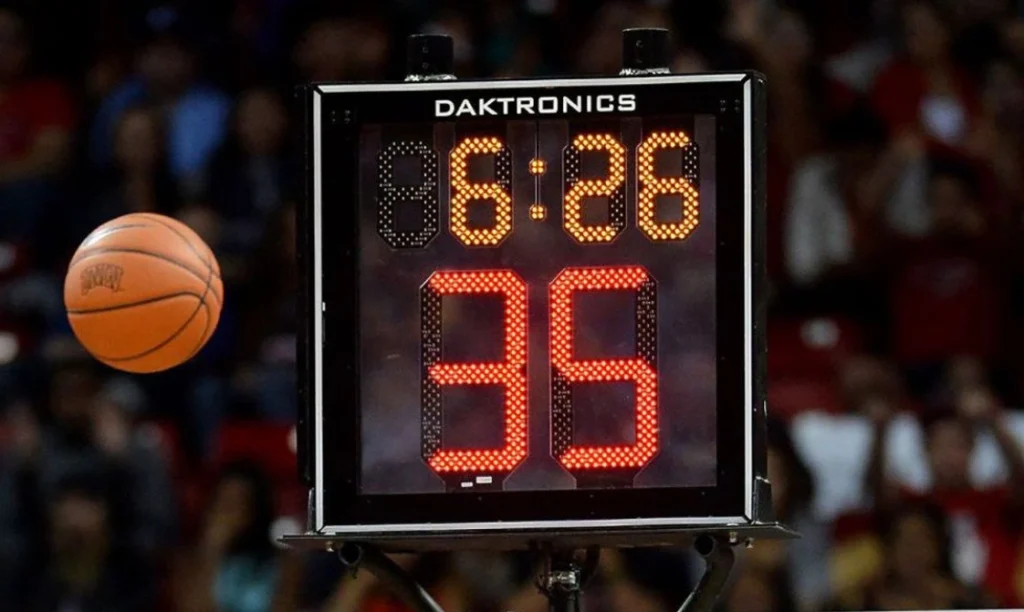
For fans, a long game means another trip to the kitchen. For players, it is a two-and-a-half-hour cycle of sprinting and stiffening. An NBA starter is not merely playing 48 minutes; they are maintaining “game-ready” physiological states for nearly 150 minutes while being peak-active for only 35 to 40 of those minutes.
The stop-start nature of modern basketball creates a unique biological tax. Imagine sprinting 100 meters, standing completely still for three minutes during a referee review, and then being expected to explode into a vertical leap. This “cooling effect” is where injuries happen. Muscles lose elasticity, joints stiffen, and the unforgiving hardwood drains energy.
The Physiological Toll of Overtime
Players describe overtime as a battle of pure will. By the time regulation ends tied, athletes have already surpassed their planned exertion window. Our coaching observations suggest that the teams who execute in overtime aren’t necessarily the more skilled—they are the ones who managed their micro-recovery during the 22-minute “stretches” of the fourth quarter.
- NBA Starters: Typically manage 35–40 minutes of the 48-minute clock.
- Key Reserves: Handle high-intensity bursts of 15–25 minutes.
- College Starters: Often play 35+ minutes of a 40-minute game due to shorter rotations and a 30-second shot clock.
Coach’s Note: Surviving the 150-Minute Marathon
To prevent “Review-Induced Stiffness,” I recommend Compression Recovery System and Rapid-Absorption Magnesium rich Electrolytes. These are essential for the 2.5-hour marathon that the scoreboard calls “48 minutes.”
We are Amazon Associate . If you purchase through the links , I may earn a commission at no extra cost to you.
How to Plan Your Time Around a Basketball Game
For practical scheduling and athlete preparation, use these “Real-World” timeframes. Note that while the clock says one thing, your body (and your watch) will experience another.
| League Level | Real-World Duration | Physiological Focus | Recommended Sideline Gear |
| NBA | 2.5+ Hours | Long-Term Muscle Elasticity | Compression Recovery |
| NCAA | 2.1 Hours | Sustained High-Intensity Fueling | Electrolyte Bundles |
| High School | 1.5 Hours | Rapid Pre-Game Activation | Warm-up Resistance Bands |
Coach’s Tip: The “Real-World” duration is 3x the clock time. If you are a player, you aren’t just “playing” for 48 minutes; you are “managing” for 150. Use the Official Rulebook Table at the bottom of this page for a specific breakdown of halftime and timeout lengths for your league.
The Complete Picture
Basketball’s relationship with time is not a bug. It is the architecture of the sport. The stopped clock creates the strategic framework for everything coaches do with timeouts, everything players do with foul management and energy conservation, and everything fans experience in those final minutes when a 20-point lead can evaporate or a two-point deficit can get cut to zero.
The next time you watch a game, pay attention to when coaches call timeouts and why. Watch how starters pace themselves through the first three quarters to have legs in the fourth. Notice how the game’s rhythm changes between a college half and an NBA quarter. The scoreboard clock tells you one number. The chess match playing out in real time tells a completely different story.
| Level | Regulation Time | Real-World Duration | Overtime Period |
| NBA | 48 min (4×12 quarters) | 2h 15m – 2h 30m | 5 min (unlimited OT) |
| NCAA Men | 40 min (2×20 halves) | ~2h 05m – 2h 15m | 5 min (unlimited OT) |
| NCAA Women | 40 min (4×10 quarters) | ~2h 00m | 5 min (unlimited OT) |
| WNBA | 40 min (2×20 halves) | ~2h 00m | 5 min (unlimited OT) |
| FIBA | 40 min (4×10 quarters) | ~2h 00m | 5 min (unlimited OT) |
| High School | 32 min (4×8 quarters) | 1h 30m – 1h 45m | 4-5 min |
| Youth | 32 min (continuous clock) | Under 1 hour | Varies |
FAQ about Basketball Game Length
Let’s address specific questions viewers, players, and coaches ask most frequently:
How long is an NBA game with overtime?
Each overtime period adds 5 minutes of game time but typically extends real time by 20-30 minutes due to additional timeouts, commercials, and strategic fouling.
Why does the last minute take so long?
Three factors extend the final minute: intentional fouling to stop the clock (when trailing), timeout usage to advance the ball or set plays, and the natural stoppages for free throws and inbounding.
How long are halftime breaks in NBA, NCAA, high school and international ?
NBA: 15 minutes. NCAA: 15-20 minutes (often longer for televised games). High school: Usually 10-15 minutes. International: 15 minutes.
What’s the shortest a basketball game could be?
A complete blowout with minimal fouls, no overtime, and efficient time management could approach 1 hour 45 minutes for an NBA game, but this is exceptionally rare.
How long do players actually play?
NBA starters typically play 35-40 minutes of the 48-minute game. Key reserves: 15-25 minutes. End-of-bench players: 0-10 minutes. College starters often play closer to 35 minutes of the 40-minute game due to shorter benches.
Why do some games end faster than others?
Factors include: fewer fouls (less free throw time), fewer timeouts used, no overtime, efficient instant replay reviews, and commercial break management by broadcasters.
How has game length changed over time?
Games have gradually lengthened due to: added commercial obligations, instant replay implementation, more frequent timeouts in close games, and deliberate foul strategies in late-game situations.
Does the clock stop after every basket?
No. In the NBA, the clock only stops after made field goals during the last two minutes of the fourth quarter and overtime.
How many timeouts are allowed in a game?
NBA teams get 7 timeouts; NCAA teams typically get 4 or 5 depending on whether the game is televised.
How long is an NBA game?
48 minutes of regulation, typically two to two and a half hours in real time. Playoff games can exceed three hours.
How long is halftime in basketball?
15 minutes for the NBA, WNBA, and most college regular-season games. Extended to 20 minutes during March Madness.
How long does basketball overtime last?
Five minutes per overtime period at the NBA, WNBA, FIBA, and college level. Each OT adds roughly 20 to 30 real-world minutes when you include timeouts and stoppages.
How long is a college basketball game?
40 minutes of regulation, about two hours total. March Madness games run slightly longer due to extended halftime.
How long is a high school basketball game?
32 minutes of play across four 8-minute quarters, typically 60 to 90 minutes total including breaks.
Why does the last minute of a basketball game take so long?
Intentional fouling to stop the clock, strategic timeout use, and free throw sequences all combine to turn 60 seconds of game clock into 10 to 20 minutes of real time in close games.
Can a basketball game go on indefinitely?
Technically yes. There is no cap on overtime periods at the NBA, WNBA, or college level. The NBA record is six overtimes. The NCAA record is seven.
Does the clock stop after every basket?
No. In the NBA, the clock only stops after made field goals during the final two minutes of the fourth quarter and in overtime.
How many timeouts are allowed in an NBA game?
Seven timeouts per team are allowed in NBA games, plus two 20-second timeouts per half.

Hello!
I’ve been playing and coaching basketball for over 15 years, and testing gear has always been part of my passion for the game. Over the years I’ve personally assembled and used more than 50 different basketball hoops — from budget portables you can roll onto a driveway to heavy in-ground systems that feel like what you see in gyms.
When I review a hoop, I don’t just copy specs from the box. I set it up, play on it in different conditions, and pay attention to how it holds up — whether it’s rim stability, rebound quality, or how the base handles wind and weather. I also keep up with the latest product releases and feedback from other players so my guides reflect what actually works, not just marketing claims.
My goal here at Outdoor Basketball Shop is simple: to share hands-on, unbiased insights so you can choose the right hoop for your space, your budget, and your style of play. Every recommendation is based on real testing and experience, and I always disclose when links may earn a commission, at no extra cost to you.
. Learn more about me on my about page.


An NBA game length is 48 minutes (4 * 12)
> An NBA game length takes precisely 24 minutes to complete.
>
> The game is divided into four quarters of the same time frame of roughly 12 minutes
Thanks a lot! corrected.