Ultimate Guide: Basketball Hoop Height for Every Age & Level (Regulation, NBA, & More)
Ever wondered, “How high is a basketball hoop supposed to be?” You’re not alone. Whether you’re setting up a hoop for your kids, checking regulations for your local court, or just curious about NBA specs, getting the height right is fundamental to enjoying the game and developing proper skills.
This definitive guide cuts through the confusion. We’ll cover the official regulation height, the logic behind adjustable heights by age, and answer every common question—from “Why 10 feet?” to “How do I measure my rim?”
The Short Answer: Regulation Basketball Hoop Height
The official, regulation height of a basketball hoop is 10 feet (3.05 meters). This universal standard is used by:
- The NBA
- WNBA
- NCAA (College)
- FIBA (International play)
- High School and Middle School leagues (for players in 6th grade and above)
This 10-foot standard dates back to 1891 when Dr. James Naismith, the inventor of basketball, nailed the first peach basket to the lower rail of a running track balcony at the YMCA—which happened to be 10 feet off the ground.
Basketball Rim Height by Age: The Essential Guide
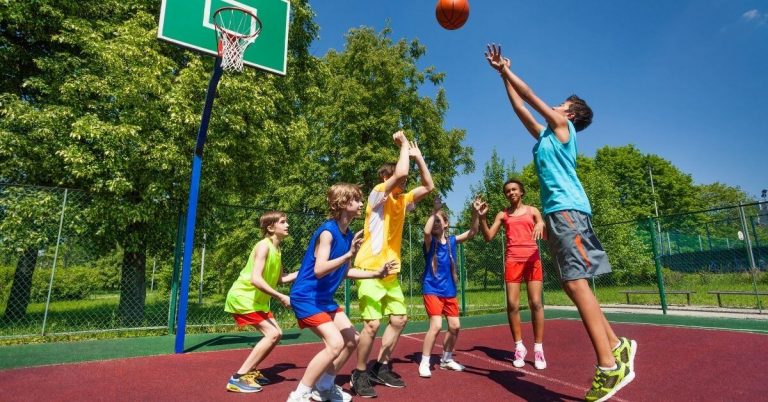
Using a 10-foot hoop for young children often leads to frustration and poor shooting form, as they “throw” the ball instead of shooting it. An adjustable height basketball hoop is the perfect solution, allowing the rim to grow with your child’s skills.
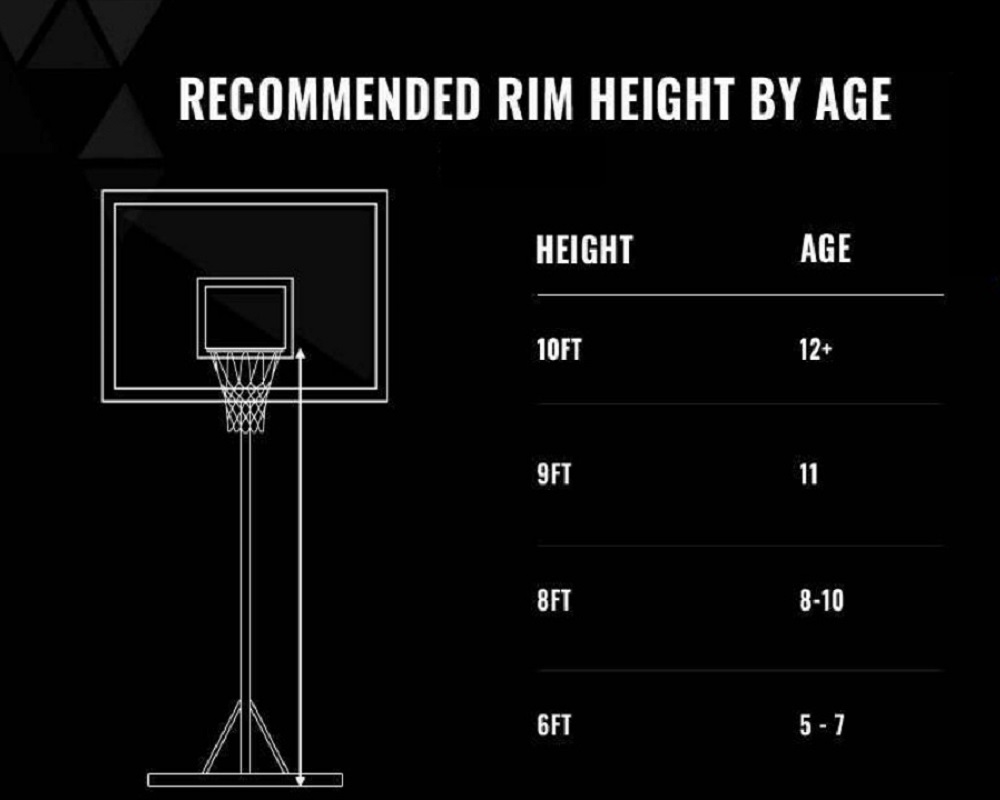
Here is the consensus basketball hoop height by age guide recommended by youth basketball programs like Nike Basketball Camps and the American Sports Education Program (ASEP):
| Age / Grade Level | Recommended Hoop Height | Focus & Rationale |
|---|---|---|
| Ages 5-7 (Up to 2nd Grade) | 6 – 7 Feet | Building fundamental coordination, having fun, and developing a love for the game. The low height allows for success and proper form. |
| Ages 8-9 (3rd-4th Grade) | 8 Feet | Continuing skill development. Children are stronger but still benefit from a lower rim to perfect shooting mechanics without straining. |
| Ages 10-11 (5th Grade) | 9 Feet | A challenging step towards regulation height. Helps build arm strength and arc on the shot while maintaining good technique. |
| Age 12+ (6th Grade & Above) | 10 Feet (Regulation) | Once fundamentals are solid, moving to the official regulation basketball hoop height allows skills to translate directly to school or league games. |
Pro Tip: The key is to prioritize proper shooting technique over reaching the regulation rim too early. An adjustable hoop lets you emphasize form and build confidence at every stage.
NBA Basketball Hoop Height: Is it Different?
Is the NBA rim 12 feet? Are NBA rims really 10 ft?
This is a common myth. The height of a basketball hoop in the NBA is exactly the same as the international standard: 10 feet (3.05 meters). There is no difference.
While NBA players like Rudy Gobert make a 10-foot rim look small, the physical challenge comes from elite athleticism and defense, not a raised hoop. The NBA rim height is 10 feet, ensuring consistency from backyard practice to the professional stage.
Complete Basketball Hoop & Court Dimensions
Understanding the full regulation size of a basketball hoop involves more than just rim height.
- Rim (Basket) Diameter: 18 inches (46 cm). The ball (29.5″ for men’s) has plenty of room to pass through.
- Backboard Dimensions: 72 inches wide x 42 inches tall (1.83m x 1.07m). The inner rectangle (the “target”) is 24 inches wide x 18 inches tall.
- Net Length: 15-18 inches (38-45 cm), typically made of white nylon cord.
- Free-Throw Line Distance: 15 feet from the backboard.
- Three-Point Line Distance: Varies (NBA: 23.75 ft; College: 22 ft 1.75 in; HS: 19.75 ft).

FAQs: Your Basketball Hoop Questions, Answered
How tall are basketball hoops?
Basketball hoops are 10 feet (3.05 meters) tall for regulation play for adolescents and adults. For younger children, recommended heights range from 6 to 9 feet to match their age and skill level.
What is the correct height for a basketball hoop?
The correct height depends on the player’s age:
- For fun and skill development (Ages 12 and under): Follow the age-adjusted heights in our chart above (6ft, 8ft, 9ft).
- For official, competitive play (Age 12 / 6th grade and older): The correct height is always the regulation 10 feet.
How to tell if a rim is 10 feet?
You can accurately measure rim height with a tape measure and a step ladder (use a spotter for safety). Measure from the front top edge of the rim straight down to the playing surface. It should read 10 feet (120 inches or 3.05m). Many parks mark the pole at the 10-foot point—look for a line or band.
Why are basketball hoops 10 feet high?
Basketball hoops are 10 feet high largely by historical accident. Dr. James Naismith attached the first hoop to a 10-foot-high running track balcony at the Springfield YMCA. The height proved challenging yet achievable, and it became the permanent standard.
How high should a basketball hoop be for kids?
For kids, the hoop should be low enough to allow proper shooting form and build confidence. Start as low as 6-7 feet for kindergarteners, moving up to 8 feet for 3rd/4th graders, 9 feet for 5th graders, and finally 10 feet by 6th grade.
What is the regulation size of a basketball hoop?
A regulation basketball hoop consists of:
- Rim Height: 10 ft (3.05 m)
- Rim Diameter: 18 in (46 cm)
- Backboard: 72 in x 42 in (1.83 m x 1.07 m)
- Net: 15-18 in (38-45 cm) white cord
Choosing the Right Hoop for Your Home
When selecting a system, prioritize adjustability. A portable or in-ground adjustable basketball hoop is ideal for families. Key features to look for include:
Key Features to Look For:
- Adjustment Mechanism: Look for a reliable, easy-to-use system—typically a crank-lift or telescopic pin system—that allows one person to safely change the height.
- Backboard Material & Size: Larger backboards (54″ to 72″) provide a better rebound. Opt for shatter-resistant polycarbonate or acrylic over glass for safety and durability outdoors.
- Pole & Frame Construction: A solid steel pole (often 4″x4″ or 5″x5″) with powder-coated finish resists rust. A stable, wide-base design is crucial for safety during play.
- Rim Quality: A spring-loaded, breakaway rim is essential for older kids and adults. It reduces stress on the system during dunks and allows the rim to flex downward before snapping back, preventing damage.
For a detailed breakdown of top-rated models, features, and value comparisons, see our comprehensive guide on the Best Outdoor Basketball Hoops for 2026.

Final Tip & Installation: Always ensure your playing surface is flat, level, and clear of debris. For in-ground hoops, professional installation is recommended. For portable hoops, follow the fill-weight instructions precisely for stability. Most importantly, set the rim to the right height for the players using it, practice consistently, and have fun building your skills on your own home court!

Hello!
I’ve been playing and coaching basketball for over 15 years, and testing gear has always been part of my passion for the game. Over the years I’ve personally assembled and used more than 50 different basketball hoops — from budget portables you can roll onto a driveway to heavy in-ground systems that feel like what you see in gyms.
When I review a hoop, I don’t just copy specs from the box. I set it up, play on it in different conditions, and pay attention to how it holds up — whether it’s rim stability, rebound quality, or how the base handles wind and weather. I also keep up with the latest product releases and feedback from other players so my guides reflect what actually works, not just marketing claims.
My goal here at Outdoor Basketball Shop is simple: to share hands-on, unbiased insights so you can choose the right hoop for your space, your budget, and your style of play. Every recommendation is based on real testing and experience, and I always disclose when links may earn a commission, at no extra cost to you.
. Learn more about me on my about page.